


The hospitality landscape is shifting. While fads fade, a set of structural trends is reshaping how successful hotels operate and grow.
This guide cuts through the noise to highlight the five trends that will define competitive advantage in 2026.
1. The unified system imperative
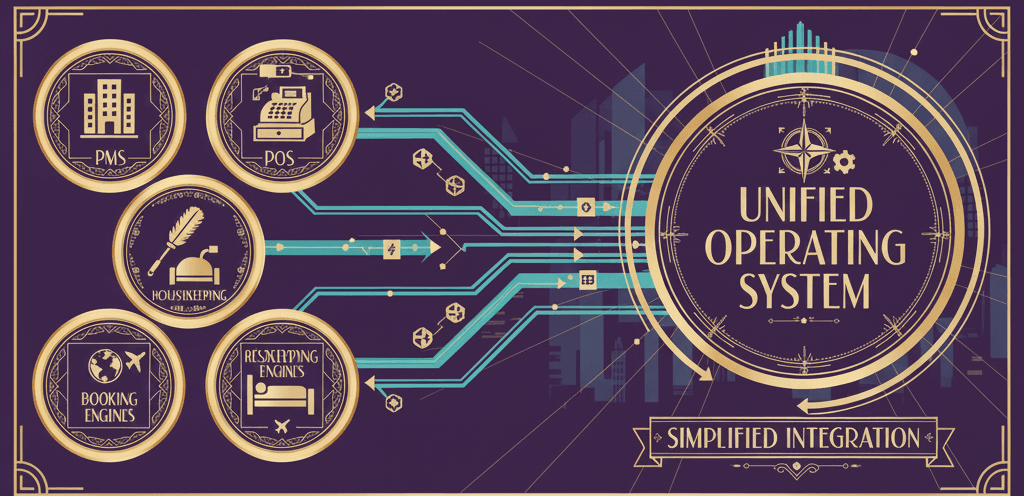
Fragmented technology really drains profit. Fewer than one in four hotels have fully integrated systems. Industry reports also show that only 24% of hotels have end-to-end integration across PMS, RMS, POS, booking engines, distribution systems, and loyalty programs.
In 2026, smart hotels unify front desks, housekeeping, revenue, and operations through a single real-time operating system.
Pro tip:
Focus on integrating the numerous legacy tools your team uses most. Quickrooms operating system unifies operations, so data flows and staff spend less time on manual updates.
2. ROI-first technology decisions
The era of “innovation for innovation’s sake” is over. Hotels now demand measurable returns before investing: how many hours will this save weekly, what revenue lift can we expect? And what is the real cost of onboarding? Operators who set clear success metrics upfront and require 30–60–90-day ROI projections consistently make smarter, more profitable tech choices.
Pro tip:
Treat any new tool like an investment proposal, if the value isn’t quantifiable, it’s a distraction.
3. Invisible service architecture
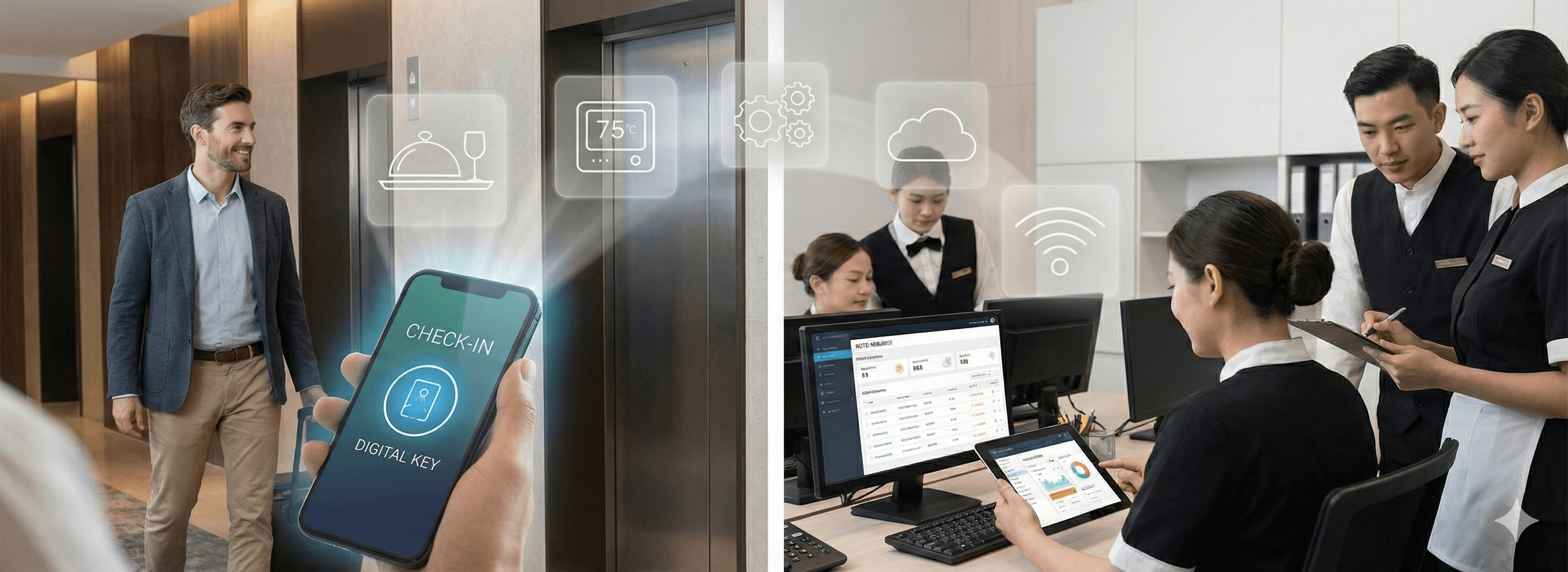
Guests don’t want to figure out your technology; they just want things to work. Invisible service means routine tasks like mobile check-in, digital keys, and automated requests happen seamlessly in the background.
When the tech disappears, service feels effortless, and staff can focus on high-touch moments that actually shape satisfaction. Hotels that streamline guest-facing processes report a rise in convenience-related satisfaction scores and ratings.
Pro tip:
Start with one high-friction moment like check-in and make it completely self-sufficient.
4. Sustainability as operational efficiency
Sustainability is no longer a marketing angle-it’s a direct operational advantage. Modern energy and resource systems reduce waste, cut costs, and attract an increasingly eco-aware guest segment. Smart energy technologies from providers like Schneider Electric now reduce building energy costs through real-time, occupancy-based adjustments. Research shows 45% of travelers prefer stays with sustainability labels, and 67% want clearer certification standards to guide choices.
Hotels that approach sustainability as a long-term cost-saving strategy, not just a messaging effort, are securing stronger margins and guest loyalty.

Pro tip:
Prioritize upgrades that cut utility costs immediately, they pay for themselves faster than any marketing claim.
5. From data collection to predictive action
Hotels collect more data than ever, but most of it goes unused. The differentiator in 2026 is predictive intelligence: systems that automatically turn data into action. From optimizing rates based on real-time booking signals to flagging equipment issues before they disrupt a stay, predictive tools reduce guesswork and unlock smoother, more profitable operations. Research shows predictive maintenance alone can reduce equipment failure and cut maintenance costs by 18-25%.
Pro tip:
Start by automating one prediction like rate adjustments or maintenance alerts and expand once results are clear.
The 2026 hotel blueprint
The hospitality landscape in 2026 will be shaped by these trends: unified systems that connect operations, ROI-focused technology decisions, invisible service that delights guests, sustainability that drives both efficiency and appeal, and predictive analytics that turn data into action.
Hotels that understand and act on these trends will be better equipped to stay competitive, streamline operations, enhance guest experiences, and maximize revenue in the years ahead.
Stay ahead
See how these trends can transform your hotel’s performance.