
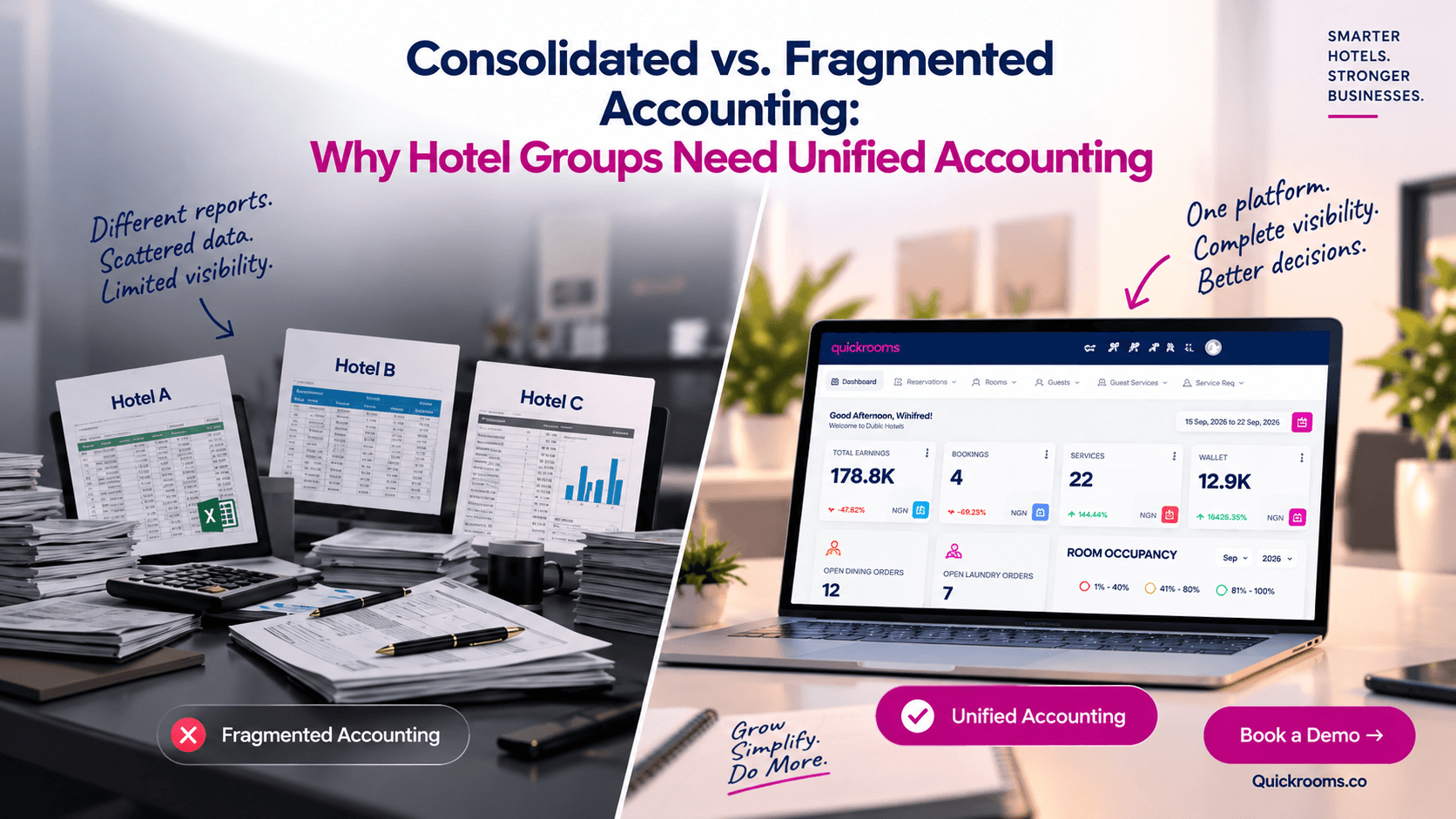
Consolidated vs. Fragmented Accounting: Why Hotel Groups Need Unified Accounting
Managing one hotel’s finances can get complex and complicated. Managing several properties can even make that complexity much harder to control, especially when each hotel maintains its own financial records, reports, and accounting processes.
For hotel groups, multi-property accounting fragmentation can create reporting blind spots. When financial information is spread across different systems and properties, it becomes harder to get a clear picture of the entire business.
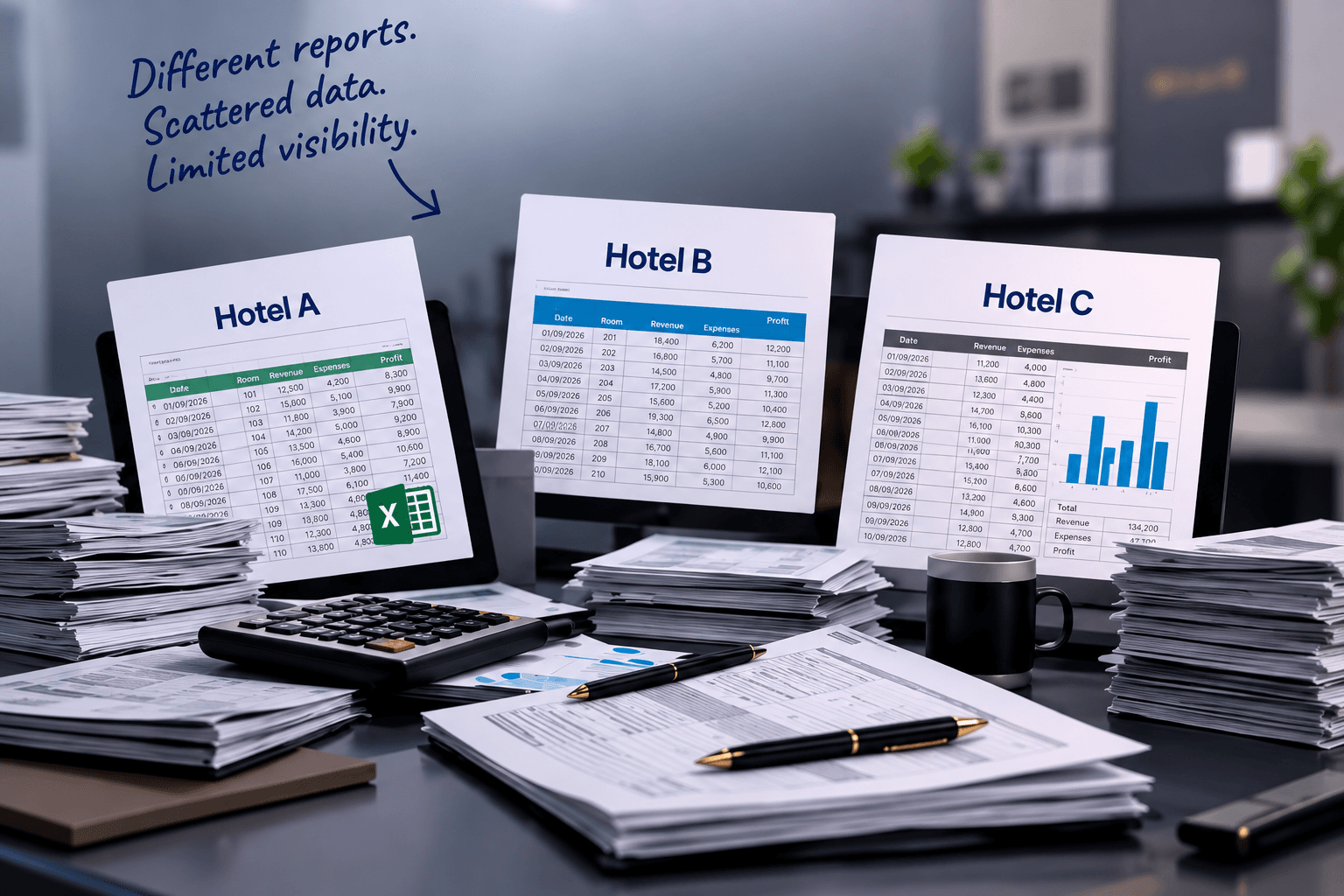
The Problem with Fragmented Hotel Accounting
Imagine a hotel group operating five properties. Each property records its revenue, expenses, purchases, payroll, and other financial activities separately.
Individually, each set of accounts may appear complete. But when management wants to understand the performance of the entire group, they may have to bring information from multiple properties together before making sense of it.
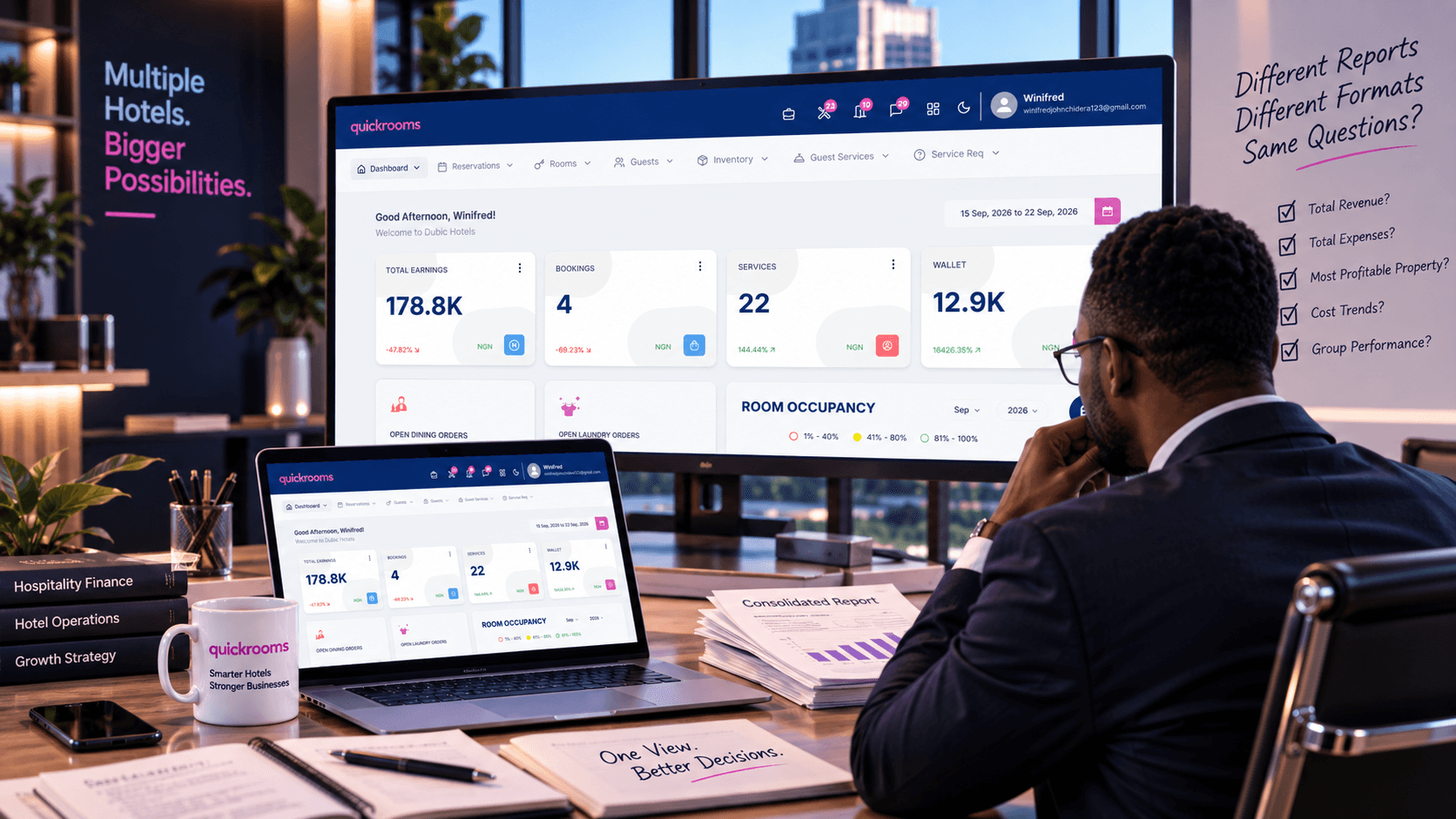
This can make questions such as these harder to answer:
• How is the group performing overall?
• Which properties are generating the strongest revenue?
• Where are costs increasing?
• How do the properties compare?
• What does the group's financial position look like as a whole?
The more properties a group operates, the more challenging this becomes.
Why Unified Accounting Matters
Unified accounting brings financial information from multiple properties into a more connected structure.
Instead of treating every hotel as an isolated financial operation, management can have a broader view of the group while still maintaining visibility into individual properties.
This makes reporting more meaningful.
A property manager can focus on their hotel's performance, while group management can look across properties to understand revenue, expenses, profitability, and overall financial performance.
Reducing Reporting Blind Spots
Fragmented information can make it easy for important patterns to go unnoticed.
A cost increase at one property may look insignificant when viewed alone. But when combined with similar increases across several properties, it could reveal a wider operational issue.
Unified reporting makes these relationships easier to identify.
It can also help management spend less time collecting information from different properties and more time using that information to make decisions.
From Property Level to Group Level
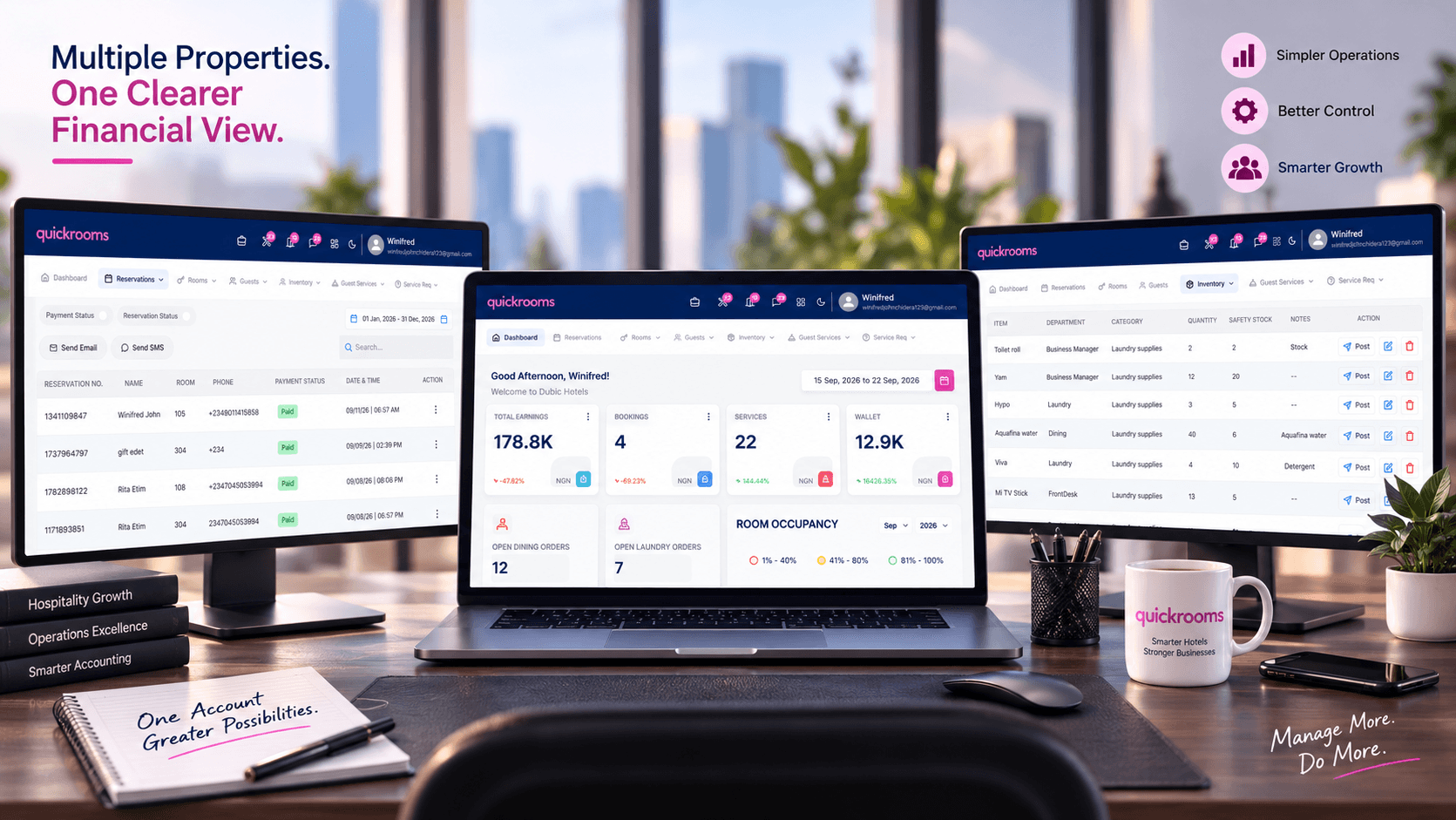
The goal of consolidated hotel accounting is not to remove individual property visibility.
It is to connect it.
Hotel managers still need access to the financial information relevant to their property. At the same time, owners and group executives need a broader view of how their properties are performing together.
That balance is important for multi property hotel management.
How Quickrooms Supports Connected Hotel Management
Quickrooms is built around the idea that managing multiple hotel properties should not require disconnected operations.
With a centralised platform, hotel groups can manage multiple properties from one account while maintaining visibility across their operations.
For businesses operating several hotels, connecting property information can make it easier to move from individual property reporting to a broader group view.
The result is a simpler approach to managing a growing hotel portfolio, with fewer information gaps and a clearer picture of the business.
One Group. Multiple Properties. One Clearer Financial Picture.
For hotel groups, the challenge is not simply collecting more financial data. It is making sure that data can be viewed together when the business needs a complete picture.
Unified accounting helps turn separate property records into information that management can use at both the property and group level.