

The average hotel has never collected more data.
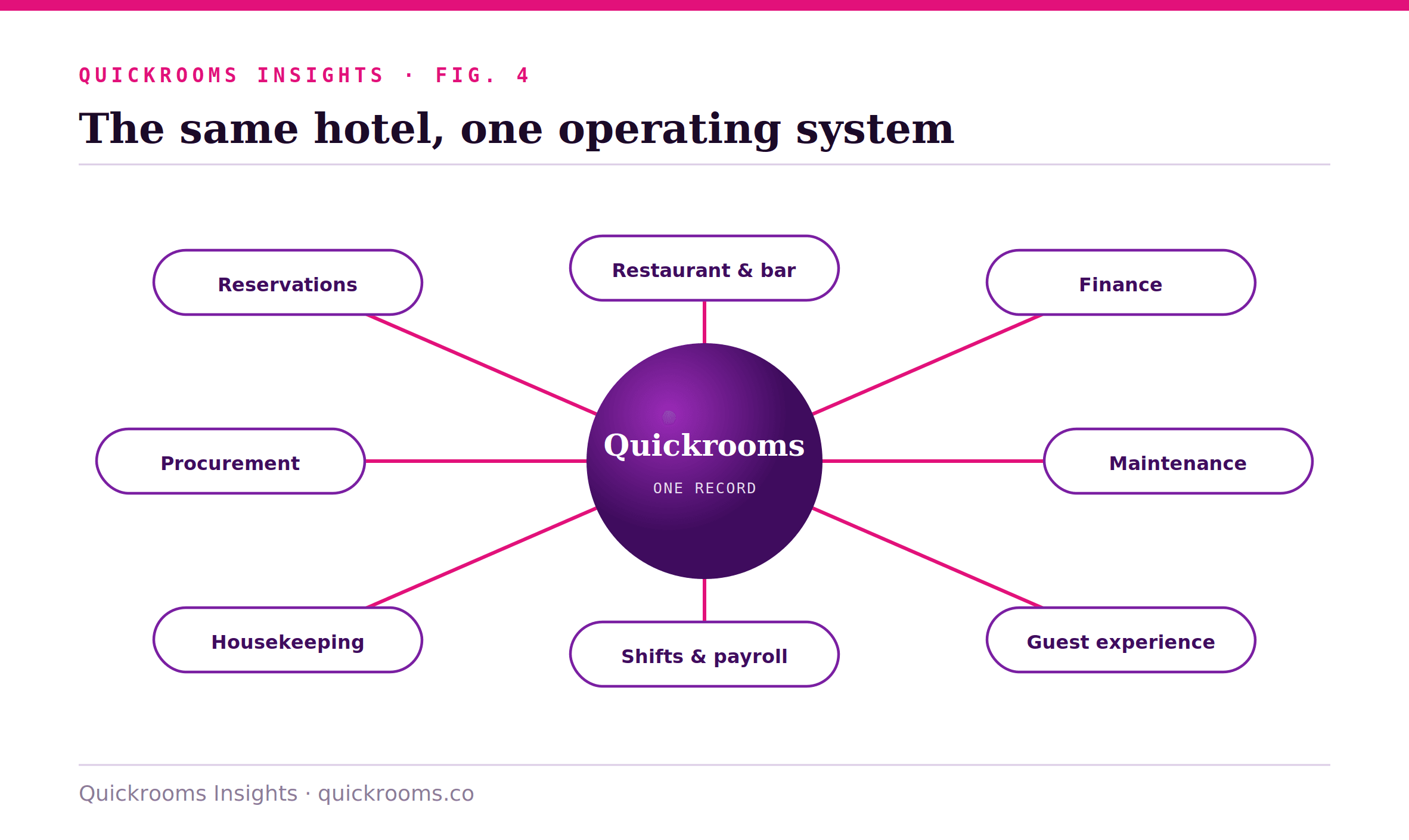
Bookings sit in the PMS, restaurant sales in the POS, and housekeeping, procurement, finance, HR and maintenance each run something else.
Every department captures something valuable. Almost none of it talks to anything else
That gap has a name: the data silo. On the org chart it looks like an IT problem. On the P&L it behaves like a profitability problem.
Quickrooms brings
Procurement
Inventory
Housekeeping
Maintenance
Workforce scheduling
Finance and
Guest operations into one hospitality operating system where every team works from the same live data.
The cost isn't the software. It's the carrying.
A hotel doesn't lose money because it owns eight platforms.
It loses money because staff spend their shifts carrying information between them, updating inventory by hand after a delivery, exporting five spreadsheets before a Monday meeting.
With Quickrooms, a received delivery updates inventory and management dashboards on its own, so there is nothing left to carry.
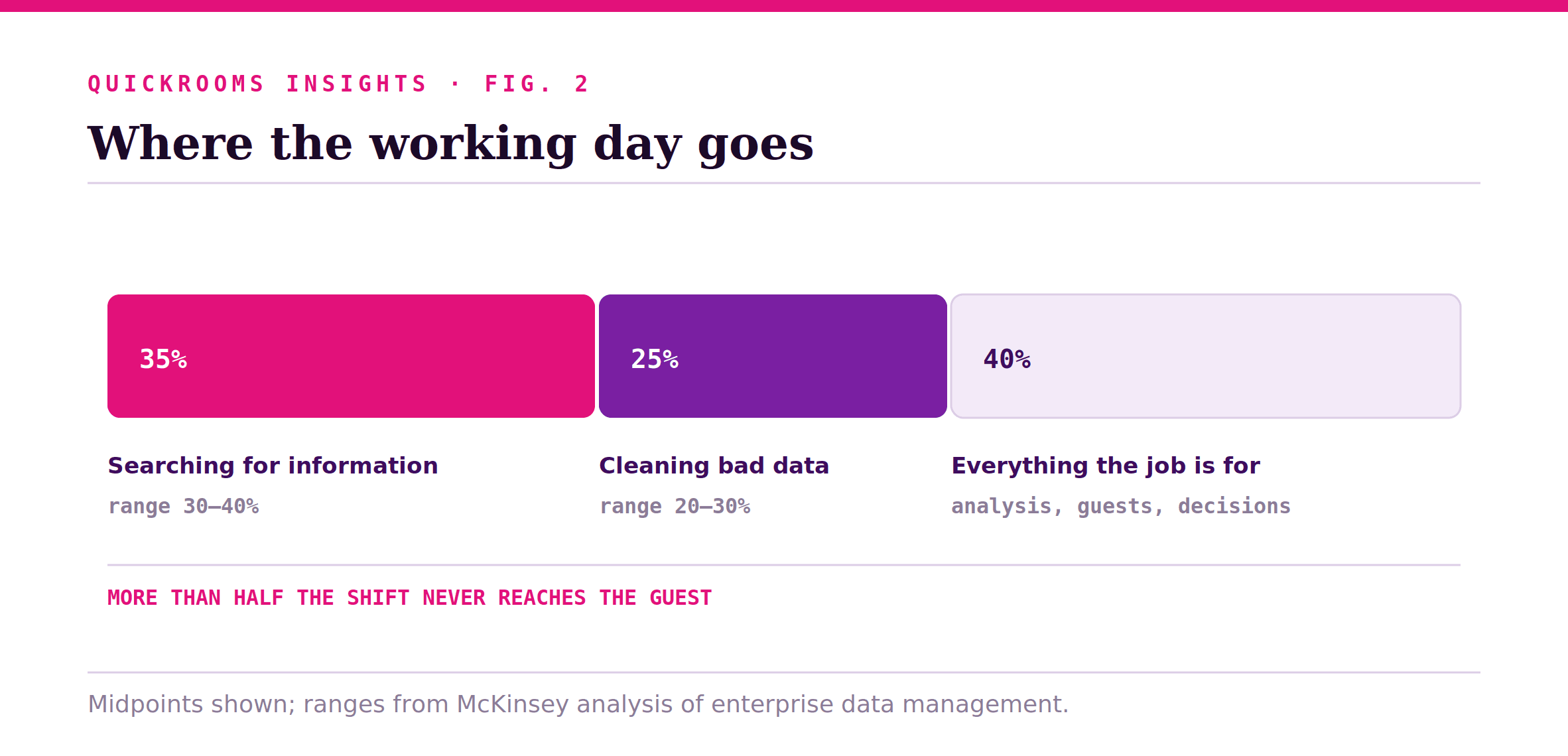
Fixing visibility, governance, and standardisation recovers up to 35% of data spend.
Duplicate entry compounds across departments
Procurement records the delivery. Finance records the invoice.
Inventory records the stock movement. Operations record consumption.
When those systems don't share a record, four people log one transaction and each is another chance to introduce an error.
Quickrooms collapses the four into one record that every department references.
Quickrooms insight
One delivery. One record. Every department updated.
Procurement confirms the delivery once
Inventory updates automatically
Supplier history is written to the record
Managers see live stock levels
Finance works from the same transaction
No duplicate entry. No reconciliation. No conflicting numbers.
Hospitality is getting more fragmented, not less
A decade of enthusiastic adoption has produced more systems, not better integration.
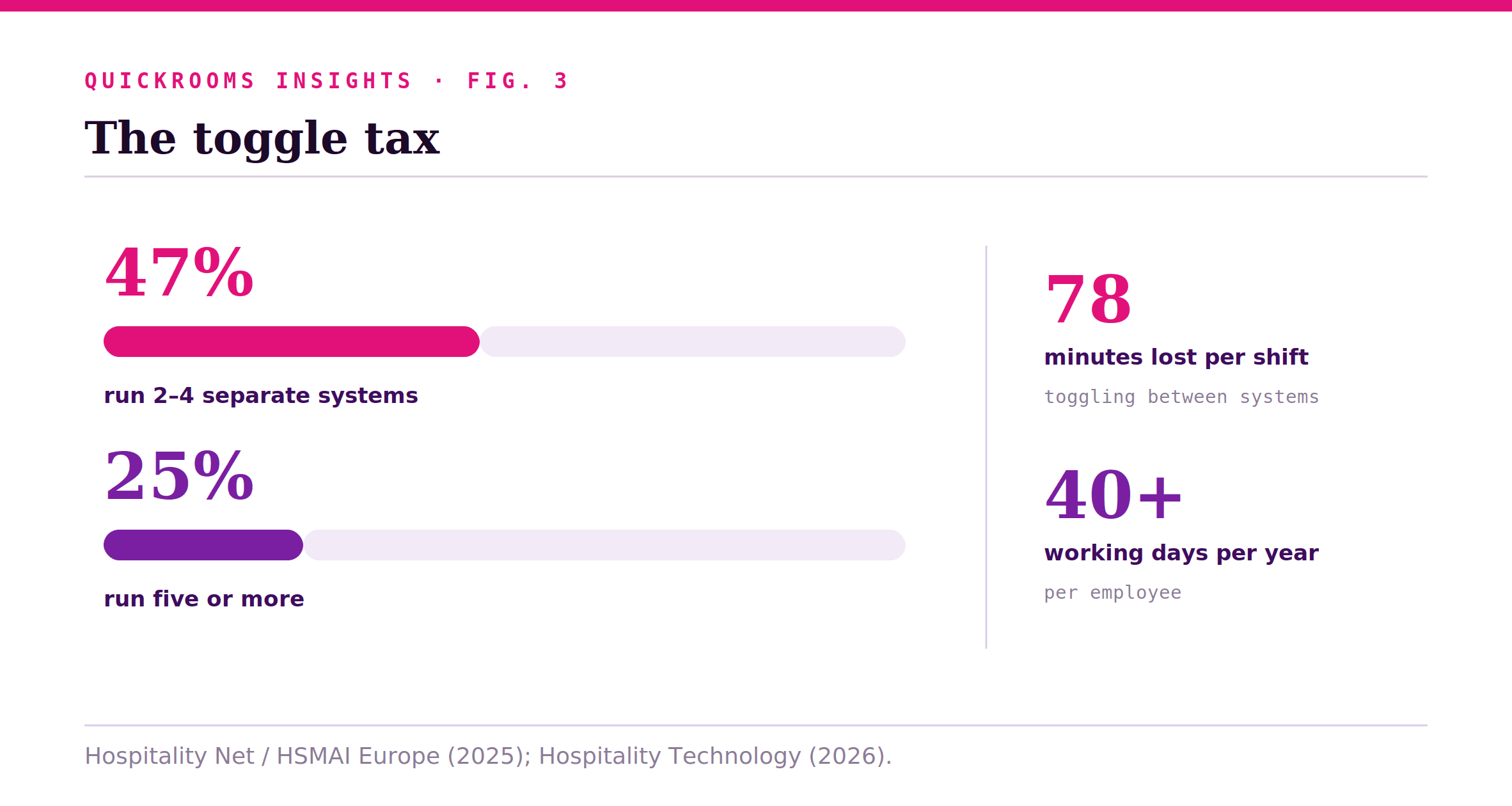
Staff lose 322 to 470 hours a year switching between them, and operational inefficiency accounts for an estimated 13–19% of operating costs.
Quickrooms replaces those tools with one system built for hotels.
What a connected hotel looks like
BEFORE CONNECTED OPERATIONS VS AFTER QUICKROOMS
Without connected systems | With Quickrooms |
|---|---|
Inventory updated manually | Inventory updates automatically |
Duplicate supplier records | One supplier record |
Multiple dashboards | One operational dashboard |
Manual reporting | Real-time reporting |
Departments work separately | Departments work together |
Slow management decisions | Faster operational decisions |
Quickrooms delivers exactly that: procurement, inventory, workforce scheduling through ClockIQ, maintenance, guest services and reporting on one real-time record.
Why connected hospitality platforms matter
In hospitality, the advantage was never having more data.
It's having connected data, one source of truth behind faster purchasing decisions, real-time stock control, visible supplier performance and smarter shift planning.
Explore
See how connected operations eliminate data silos before they become costly problems.