

Hotel Sales Directors: What’s Your Current Ratio of Corporate to Leisure Revenue?

For hotel sales directors, one of the most useful questions isn't simply, “How much revenue did we generate?”
A better question is:
“Where is our revenue coming from?”
A hotel may achieve strong overall revenue while depending heavily on one customer segment. Another property may have a more balanced revenue mix, giving it greater flexibility when demand changes.
One of the simplest ways to understand this is by examining the corporate-to-leisure revenue ratio.
This ratio shows how much of a hotel's revenue comes from corporate business compared with leisure guests. It can reveal the property's commercial profile, highlight areas of opportunity and help sales teams determine where to focus their efforts.
What Does Corporate-to-Leisure Revenue Ratio Mean?
The corporate-to-leisure revenue ratio compares revenue generated from corporate-related business with revenue generated from leisure-related business.
For example, imagine a hotel generates $1 million in room revenue over a particular period:
$600,000 comes from corporate guests and corporate accounts
$400,000 comes from leisure guests
The hotel's corporate-to-leisure revenue ratio would be 60:40.
This does not automatically mean that 60:40 is the ideal ratio. There is no universal target that works for every hotel.
The appropriate mix depends on the property's location, positioning, facilities, surrounding business environment, seasonality and target market.
The value of the ratio comes from understanding what your hotel's current mix looks like and whether it supports your commercial strategy.
Corporate and Leisure Guests Behave Differently

Corporate and leisure demand can have very different booking patterns.
Corporate guests may include business travellers, employees travelling for work, consultants, executives and professionals attending meetings or assignments.
Corporate revenue can also come through negotiated company rates, contracted accounts, business travel programmes, conferences and meetings.
Leisure revenue, on the other hand, can come from individual travellers, couples, families, groups and guests travelling for holidays, celebrations or personal experiences.
These customers often have different expectations, booking windows, travel patterns and price sensitivities.
Understanding those differences allows a hotel to sell more intelligently rather than treating every room night as the same.
Why Should Hotel Sales Directors Track the Ratio?
1. It reveals your hotel's commercial dependency
A hotel heavily dependent on corporate business may perform exceptionally well during strong business periods but become vulnerable when corporate travel declines.
Likewise, a hotel that relies primarily on leisure demand may experience significant fluctuations during low seasons or periods when travel patterns change.
The ratio helps sales leaders identify this dependency.
The objective is not necessarily to achieve a perfect 50:50 split. Instead, the objective is to understand whether the current mix creates an acceptable level of commercial resilience.
2. It helps identify growth opportunities

Suppose a hotel receives 75% of its revenue from corporate customers but operates in a destination with strong weekend tourism.
That could indicate an opportunity.
The sales team might explore leisure packages, weekend promotions, family offers, partnerships with attractions or other initiatives designed to capture demand the hotel is currently missing.
The opposite can also be true.
A leisure-focused hotel located near a major business district may have an opportunity to develop corporate accounts, weekday packages or negotiated rates.
The ratio therefore becomes a starting point for asking:
“Where is the untapped demand?”
Revenue Mix Should Be Examined Beyond Room Nights
A common mistake is to look only at the number of rooms sold.
Revenue analysis should go deeper.
Corporate and leisure guests can generate different levels of revenue across the hotel.
Consider a corporate group that books rooms, meeting space, breakfast, conference catering and transportation.
Compare that with a leisure guest who books a room and occasionally purchases food and beverages.
Although both customers occupy a room, their overall contribution to hotel revenue may be very different.
Sales directors should therefore consider:
Room revenue
Food and beverage revenue
Meeting and event revenue
Ancillary services
Length of stay
Average daily rate
Total revenue per guest or account
This provides a much clearer picture of the commercial value of each segment.
Don't Chase Revenue Without Considering Profitability

Revenue alone does not tell the entire story.
Two customer segments can generate similar revenue while producing different costs.
A corporate account might provide predictable room nights throughout the year but require a negotiated rate.
A leisure booking might achieve a higher room rate during peak periods but require more marketing expenditure to acquire.
The commercial team therefore needs to consider the economics behind each segment.
Useful questions include:
What does it cost to acquire this customer?
What rate are they paying?
How frequently do they return?
How long do they stay?
What additional services do they purchase?
How much operational support does the account require?
Does the business help fill otherwise difficult periods?
This moves the conversation from revenue volume to revenue quality.
Build a Strategy Around the Gaps
Once the hotel understands its current mix, the next step is to identify where growth should come from.
If corporate demand is too concentrated, the sales team could diversify its account base across different industries and company sizes.
If leisure demand is weak during weekdays, the hotel could develop packages or partnerships designed to stimulate demand during those periods.
If weekends are consistently strong while weekdays remain soft, corporate sales may provide an opportunity to improve occupancy during lower-demand periods.
If the hotel already has a strong corporate base, the objective may not be to replace it with leisure demand. Instead, leisure business can complement corporate demand and help balance the hotel's demand calendar.
The strategy should therefore focus on complementarity rather than simply increasing one percentage.
Measure the Right Things
A useful commercial dashboard should allow sales directors to monitor the revenue mix alongside other indicators.
Track corporate and leisure performance using metrics such as:
Revenue contribution
Room nights
Average daily rate
Occupancy
Length of stay
Booking lead time
Revenue per account
Repeat business
Acquisition cost
Cancellation patterns
These metrics can reveal changes before they become obvious in total revenue.
For example, corporate room nights may remain stable while average rates decline. Alternatively, leisure bookings may increase while average length of stay falls.
The revenue ratio alone would not explain these changes.
Connecting Commercial Decisions With QuickRooms Hotel Operations
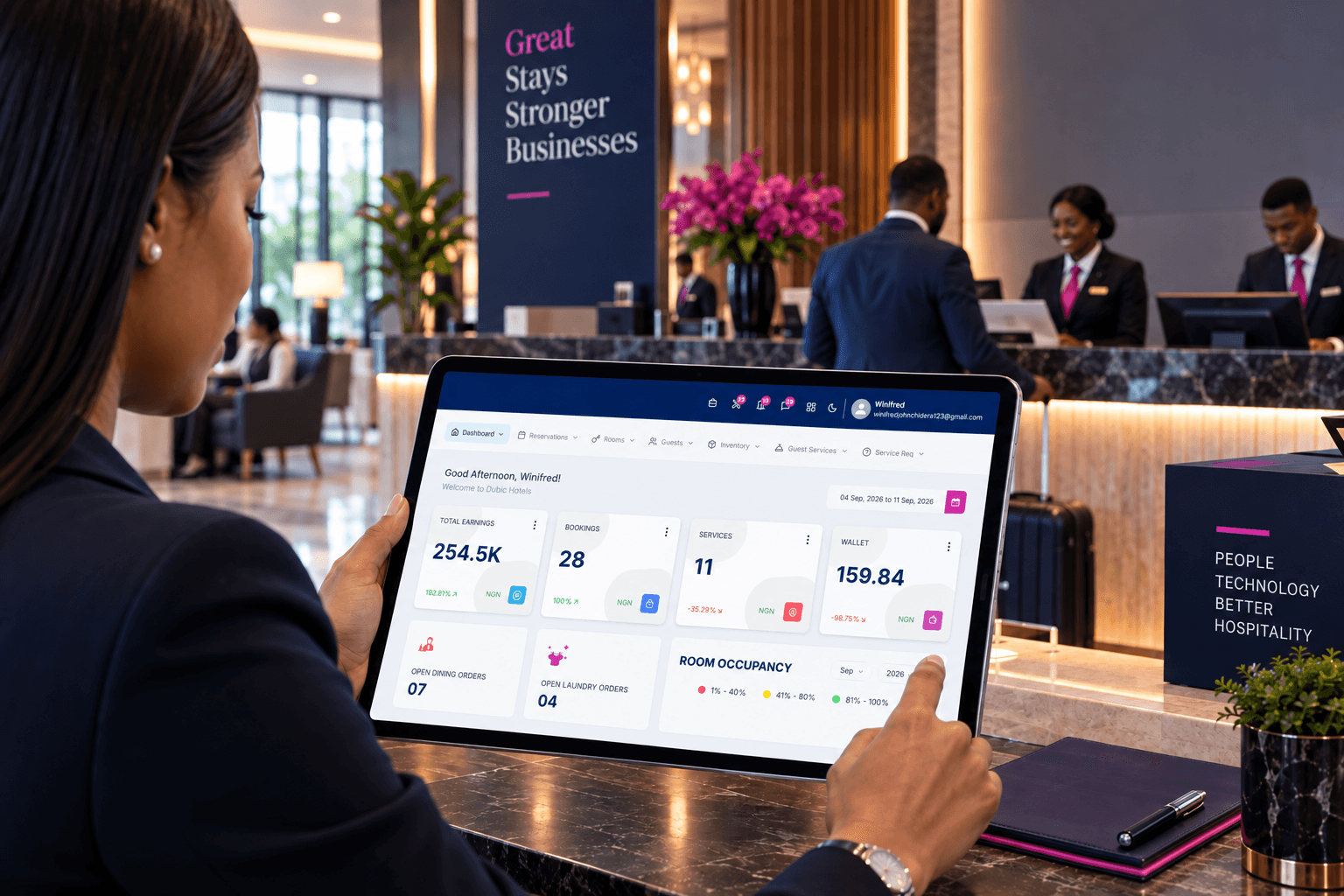
Revenue mix does not exist in isolation from the rest of the hotel.
A successful corporate account can create additional demand for housekeeping, food and beverage, meeting rooms, transportation and other services. Likewise, a leisure promotion can change occupancy patterns and place additional pressure on operational teams.
This is where Quickrooms becomes relevant.
When hotel teams have better visibility across their operations, sales and management teams can make commercial decisions with greater awareness of what is happening across the property. Quickrooms connects key hotel operations in one environment, helping teams coordinate activities rather than managing important information across disconnected processes.
For sales leaders, this kind of connected operational environment can support better communication between commercial decisions and the teams responsible for delivering the guest experience.
The goal is not simply to win more business. It is to win the right business and ensure the hotel is prepared to deliver it.
The Goal Is a Healthy Revenue Mix
There is no single corporate-to-leisure ratio that every hotel should pursue.
A luxury resort, business hotel, airport property and city-centre full-service hotel can all have completely different commercial profiles.
What matters is whether the mix supports the hotel's positioning and provides enough flexibility to manage changing demand.
A strong sales strategy understands where the hotel's revenue comes from, which segments are profitable, which periods need additional demand and where the next opportunity lies.
Quickrooms can complement this approach by giving hotel teams a more connected view of their operations, helping ensure that commercial growth is supported by the operational capacity needed to deliver it.
So, hotel sales directors:
What's your current ratio of corporate to leisure revenue?
More importantly, is that mix helping your hotel grow, or is it exposing the business to unnecessary risk?
Understanding the answer can turn a simple revenue percentage into a powerful commercial planning tool.