

Every hotel procurement team knows the drill. The vendor who was two days late on the last laundry chemical order is still on the list. The one who bumped prices 20% since the last quote never got flagged, because nobody tracked it.
Hold onto those two failures, they're what a scorecard has to catch.
Key Takeaway:
Hotels that measure supplier performance spend less time chasing vendors and more time choosing the right ones.
The stakes are rising faster than the supplier networks
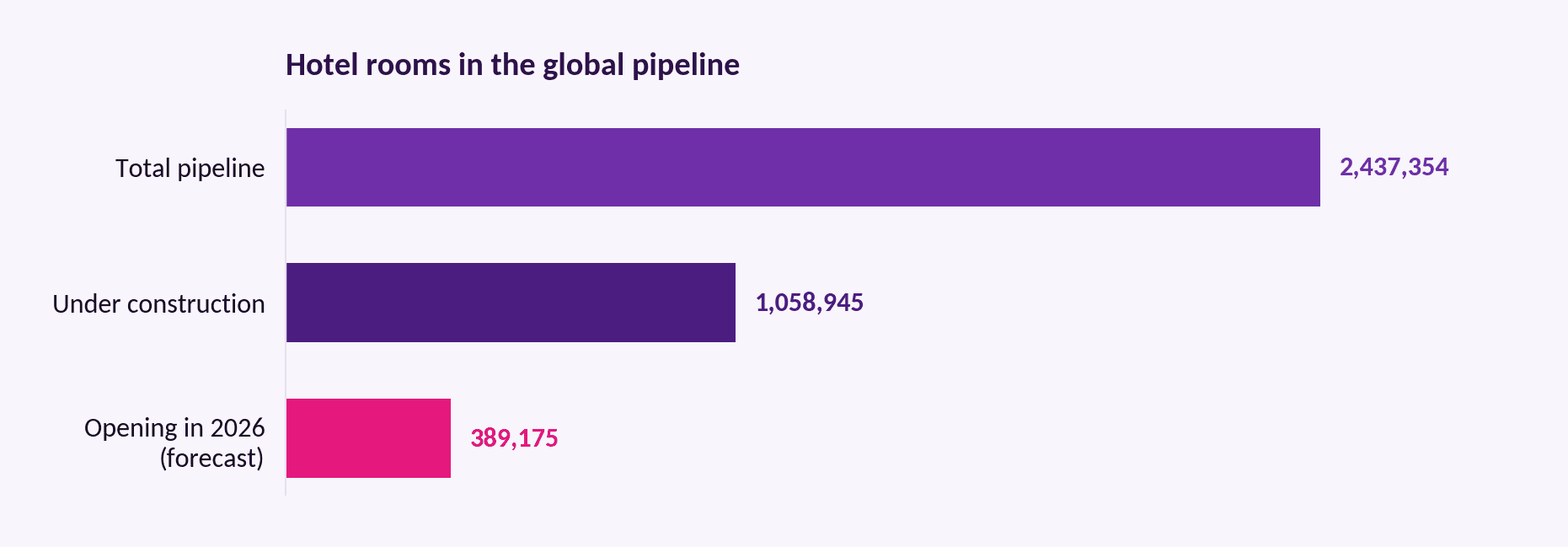
The global hotel construction pipeline is at a record: 15,922 projects and 2.44 million rooms. Roughly 389,000 hotels open worldwide in 2026, each needing laundry chemicals, kitchen supplies and safety equipment from supplier networks that aren't scaling at the same rate.
Input costs won't sit still either, and this is where memory gets expensive. The FAO Food Price Index barely moved in June 2026. Underneath it, vegetable oils were up 23.3% year on year while dairy was down 24.5%.
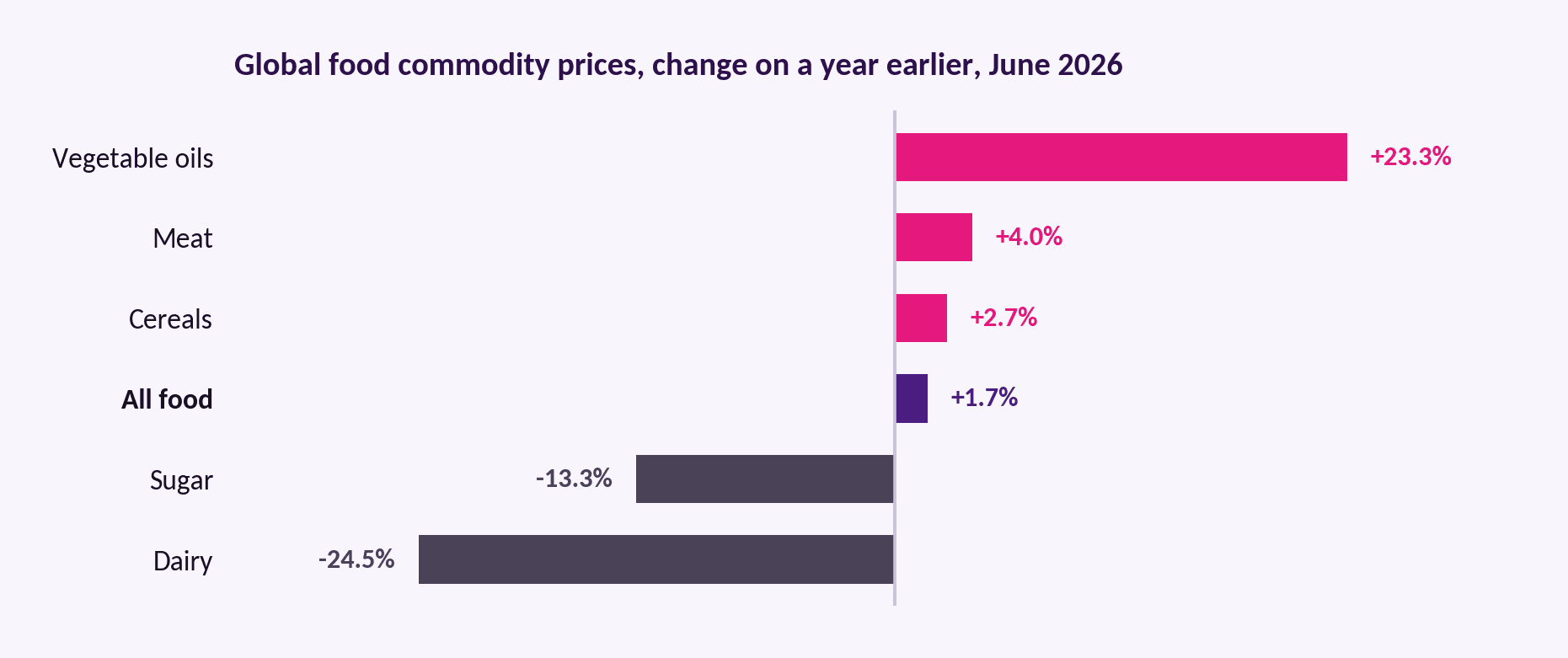
One headline number, a 48-point spread beneath it.
The pattern repeats further down: in Nigeria, national food inflation was 17.5% in June 2026 while Kogi state recorded 53%.
A hotel buying from Kogi sees none of that in a national average, but it shows as a pricing-consistency score sliding quarter on quarter, months before anyone questions an invoice.
That visibility is rare, Deloitte found only 25% of organisations can predict supply disruptions in time and valuable: McKinsey's 20-year benchmark shows mature procurement functions achieve EBITDA margin gains of five percentage points or more.
Key Takeaway:
A scorecard is how you get from “we've always used them” to a decision you can actually defend.
The four things worth measuring.
Go back to those two failures.
The late chemical order is a delivery failure; the 20% price creep is a pricing failure.
Those bite most often, so they carry 60% of the score.
Quality and compliance carry more consequences but less frequency; responsiveness matters only when something breaks, so it earns the smallest share.
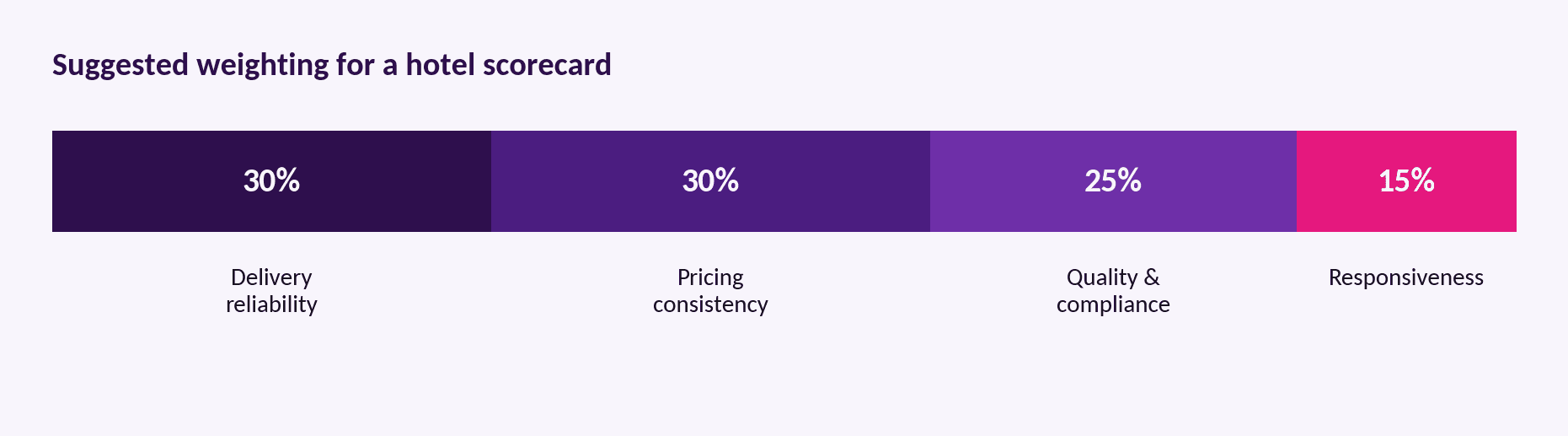
Criteria | Weight | Why it Matters |
|---|---|---|
Delivery reliability | 30% | Prevents delays that affect operations |
Pricing consistency | 30% | Reduces unexpected cost increases |
Quality and compliance | 25% | Ensures products meet standards |
Responsiveness | 15% | Measures supplier support speed |
Delivery reliability
Did the order arrive on time, in full, at the agreed quantity?
With Quickrooms, every job carries the date it was posted, the bids it drew, and the delivery against it. Reliability becomes a record, not a feeling.
Pricing consistency
Is the vendor holding to quoted rates, or does the invoice creep every cycle?
The Insights tab shows an item's average market price and how many vendors offer it, so you can judge a quote before sending it.
Quality and compliance
Does the product meet spec, food safety, material grade, safety standards, every time, or only when someone's watching?
Category filters keep these purchases traceable, so gaps don't go unnoticed until a regulator or guest complaint forces it.
Responsiveness
How fast does a supplier answer a quote or confirm availability?
For a failed air conditioner or an urgent chemical shortfall, the Merchandise tab lets you skip the bidding cycle and buy listed inventory from a nearby supplier.
Where the data actually comes from
The honest reason most hotels have no scorecard: the data lives nowhere.
Delivery dates sit in a WhatsApp thread, pricing history across old invoices, and nobody logged that the last “urgent” order took four days.
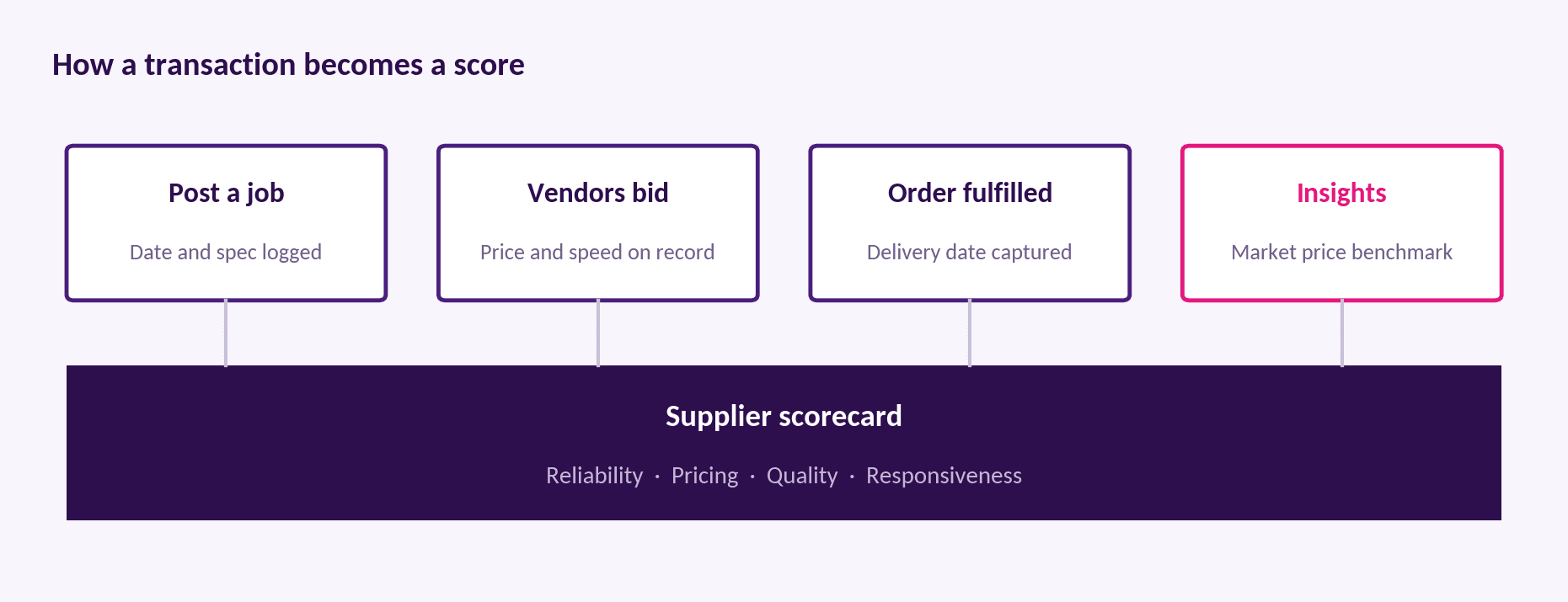
Quickrooms closes that gap. Post what you need as a job, let vendors bid, and timelines and pricing go on record from the first interaction.
Building it: five steps
Weigh the criteria to your risk. Start at a set date, then shift toward whichever failure cost you most this year.
Score every supplier 1–5, every cycle. On Quickrooms, bid prices and delivery dates are already timestamped, so two of the four scores populate from the job record. You're scoring judgement, not doing data entry, which answers “we don't have time to score everyone.”
Calculate a weighted total and set rating bands so the number triggers an action, not just a grade.
Review quarterly, using market price benchmarks to catch a supplier drifting into quiet overcharging.
Feed scores back into sourcing. A rating should decide who gets the next job posting. Otherwise it's paperwork.
The bottom line
Treat procurement as a system rather than a relationship of convenience.
See how Jobs, Merchandise and Insights turn your procurement records into a scorecard that runs itself.