
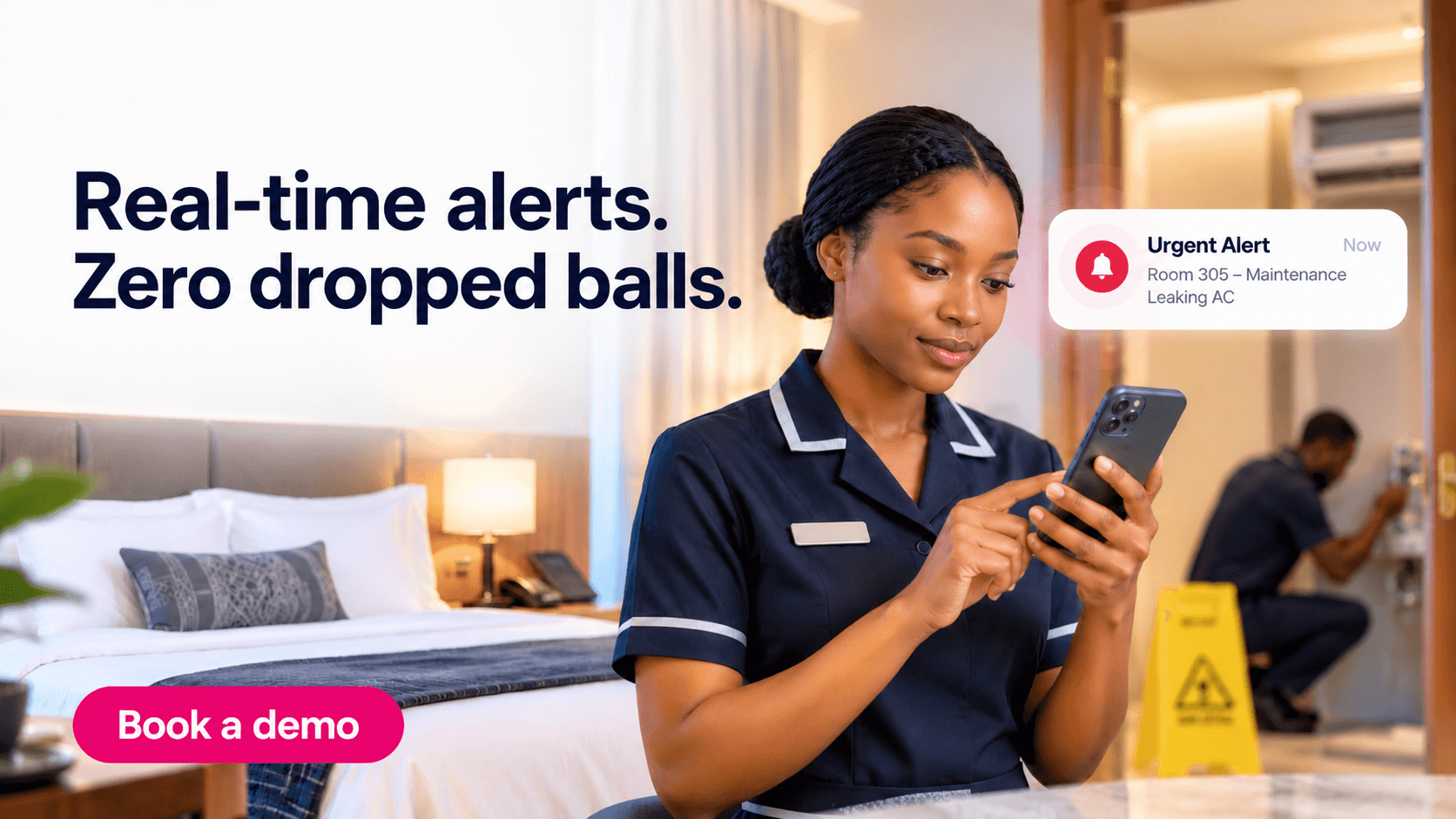
Real-Time Alerts, Zero Dropped Balls: How the Quickrooms Staff App Keeps Every Request Moving
A guest calls the front desk at 9:40 p.m. to ask for extra towels. The receptionist writes it on a sticky note and turns back to a check-in. Twenty minutes later the note is under a keyboard, the towels haven't arrived, and the guest calls again, less politely this time.
Most hotels don't miss requests because their staff don't care. They miss them because the request never reached the right person, or reached them too late. In hospitality, timing is part of the service. That's the problem real-time alerts in the Quickrooms Staff App are built to solve.
Guests Are Watching the Clock
Guests notice how long a request takes, and their patience is shorter than many hotels assume. In a survey of 400 recent hotel guests commissioned by guest-service platform ALICE, Skift reported how long guests wait before they become frustrated:
Text message: about 12 minutes
Mobile app request: about 19 minutes
Email: about 26 minutes
Social media: about 27 minutes
That's the window your team has to act, and it's measured in minutes, not hours. As ALICE co-founder Alex Shashou told Hotel Management, "At the end of the day, it is the same guest making the same request, just through a different channel." Whatever the channel, the request has to reach someone who can act on it, fast.
Where Requests Get Lost
A typical hotel shift runs on phone calls, radios, chat groups, logbooks and memory. Each one is a place where a request can slip.
Verbal handovers. A request mentioned at shift change depends on someone remembering it.
Personal chat groups. Messages get buried under other conversations, and nobody knows who picked the task up.
Paper logs. They only work when someone walks over to read them, and they are easy to leave incomplete.
No clear owner. When everyone hears about a task, everyone assumes someone else has it.
The cost isn't only an unhappy guest. Delayed maintenance turns small faults into bigger repairs. Rooms sit unready longer than they should. Managers spend their day chasing updates instead of running the property.
What Real-Time Changes
With real-time alerts, a request lands on the right staff member's phone the moment it's raised. It doesn't wait in a logbook or at the front desk. It reaches staff where they already are: on the floor, in a room or in the corridor. That changes three things:
Speed. Staff see the request immediately and can act on it right away.
Ownership. Every task has a clear owner, so nothing floats between departments.
Visibility. Managers see what has been raised and what has been handled, without a single phone call.
Case Study: Celebration Suites
Celebration Suites in Kissimmee, Florida, has 550 suites spread across more than 20 buildings on 21 acres. According to Hotel Management, the hotel ran on a paper-based system, with staff relying on golf carts and radios to communicate. Logs were often incomplete or overlooked, and that confusion behind the scenes reached the guests.
After moving guest requests and internal messages onto staff mobile devices in 2016, the hotel reported:
average response time to requests down 45%
67% of issues answered in under 11 minutes
completion time on outstanding issues down 32%
Case Study: ibis London Blackfriars
At ibis Hotels, issues began appearing instantly for maintenance and back-of-house teams through a mobile staff app, as Hospitality Net reported in 2016. The hotels ran a 15 Minute Guarantee, refunding guests whose requests weren't resolved within 15 minutes. Frederic Le Bras, Assistant General Manager at ibis London Blackfriars, said: "The system has helped us to reduce the time to respond to maintenance requests by up to 50%."
How It Works in the Quickrooms Staff App
Quickrooms connects guest services, housekeeping, maintenance and the wider hotel operation in one system. The Staff App is the part your team carries with them.
Guest Requests Reach the Team Directly
Guests can request in-stay services from their phones through Quickrooms. Instead of passing through several people, the request goes straight to the staff responsible for it.
Maintenance Requests With Priority and a Deadline
When something breaks, staff raise a maintenance request from the app. They can set a priority so urgent issues stand out, add a target date and time, attach photos or files, and broadcast the request so the right people are notified at once. A dripping tap reported at noon doesn't wait until someone remembers it at the end of the day.
Housekeeping That Stays in Sync
Room statuses such as Dirty, Clean and Under Maintenance are visible in the app, and cleaning sessions can be scheduled per room with checklists and notes. When a room's status changes, the team sees it, and the front desk isn't left guessing which rooms are ready.
A Record of Who Did What
Every cleaning session and request leaves a trail: who was assigned, when it started and when it was completed. Accountability becomes part of the workflow instead of an extra conversation.
From "Did Anyone Handle That?" to "Done"
Go back to the guest who asked for towels. With Quickrooms, the request reaches the right staff member's phone as soon as it's made. Someone picks it up, delivers the towels, and the task is closed. The guest asked once, and that was enough.
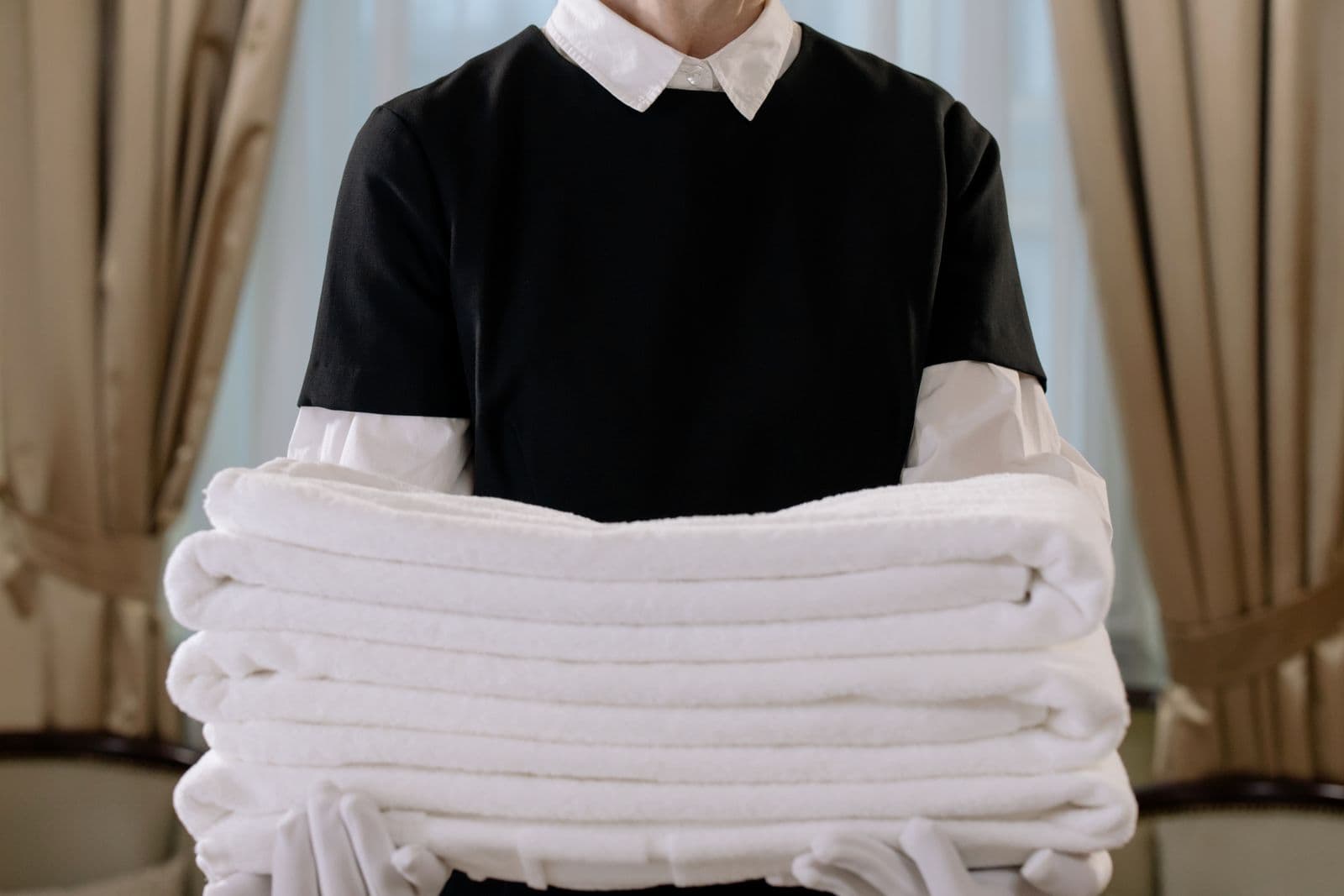
That's what zero dropped balls looks like in practice. Your team doesn't have to work harder. It simply never has to rely on memory, sticky notes or a buried chat message again.
Quickrooms. Your smart hospitality AI operating system. See how it works.
Read More Related Articles
Sources
Deanna Ting, Hotels Find That Guests Won't Wait When It Comes to Mobile Messaging, Skift, 17 October 2016.
ALICE research says how long it should take hotel staff to respond to guest requests, Hotel Management, 13 October 2016.
Lean Celebration Suites improves guest-request management, Hotel Management, 16 March 2017.
Accor Hotels Eliminates Radios, Maintenance Logs With Mobile Request Management App, Hospitality Net, 2 May 2016.
Photos via Pexels.