

Your modern guest moves at digital speed by discovering your hotel on social media, comparing options instantly, and booking without hesitation. Yet many hotels remain held back by a maze of disconnected, outdated systems that simply can’t keep up.
This widening gap between guest expectations and operational reality is fueling a major shift across the industry.
This article breaks down the move toward unified operating systems: why it’s accelerating, what problems it truly solves, and how hotels can position themselves for the future.
What is a unified operating system, really?
Picture the typical hotel tech stack: a PMS over here, a channel manager over there, a housekeeping app somewhere else, plus spreadsheets, messaging threads, and endless workarounds. Managing all these moving parts feels less like leadership and more like constant troubleshooting.
A unified operating system consolidates this fragmentation into a single, intelligent environment where room statuses update across the entire property, pricing adjusts dynamically to demand, and every guest interaction is centralized. For the first time, every department operates from the same real-time playbook.

Note:
This evolution isn’t just another software upgrade. It simply mirrors the shift from paper to digital systems years ago, which is an essential step in modern hotel management.
"The core struggle for modern hotels isn’t a lack of tools; it’s that their tools don’t talk to each other. We built Quickrooms' unified system to eliminate that friction so teams can focus on hospitality, not on fighting their own software."

Uduak Asuquo
Founder at Quickrooms
Reasons hotels are making the switch
1. Modernized guest communication
A simple guest question shouldn’t trigger a chain reaction of phone calls and system checks. In a unified system, a message flows directly to the right staff member with full context. This shift turns communication from a bottleneck into a loyalty-building advantage, meeting the demand for real-time service that links to higher guest satisfaction scores.
2. Operating leaner in a time of staffing constraints
Persistent staffing shortages mean hotels can no longer rely on complicated, multi-step processes. New team members expect intuitive, mobile-friendly tools. Unified platforms reduce training time dramatically by design, helping staff become productive faster and freeing managers to focus on real service rather than system navigation.
3. Unlocking revenue with clean, centralized data
It’s impossible to forecast accurately or price strategically when key data lives in different systems.
A unified operating system consolidates occupancy, rates, guest spending, and demand signals into one reliable source of truth.
This becomes the foundation for stronger revenue management, more effective direct booking strategies, and more meaningful upselling based on insight rather than guesswork.
4. Creating a frictionless team environment
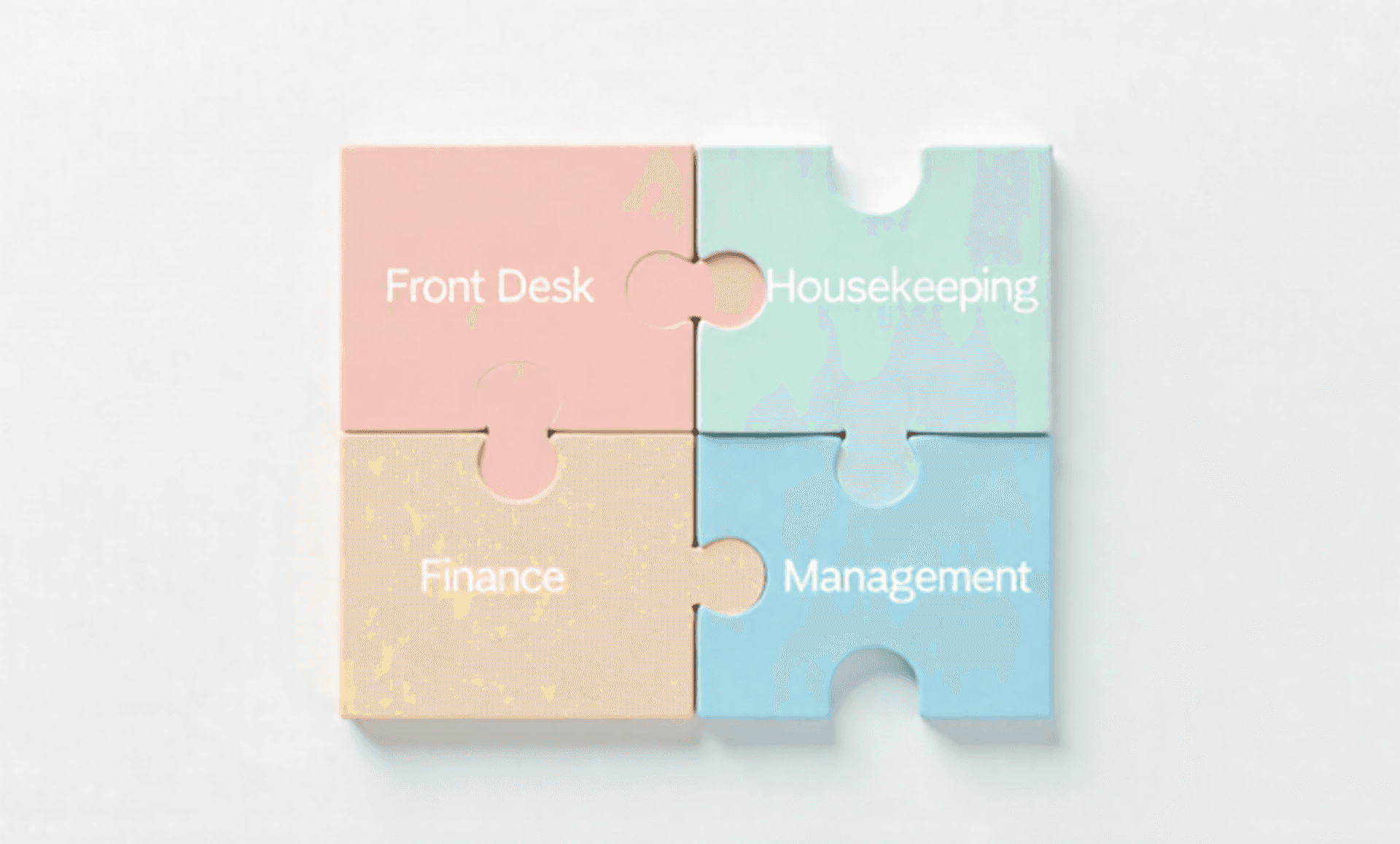
When information flows easily, silos disappear. Housekeeping sees instant check-outs, finance receives reconciled numbers automatically, and general managers gain a real-time view of property performance.
This reduces administrative noise, eliminates cross-department friction, and allows teams to focus on the guest rather than chasing information.
5. The intelligent advantage of integrated AI
Deeply embedded AI capabilities are defining next-generation platforms. Studies show hotels adopting AI-powered tools see significant improvements in personalization and revenue. With unified data to analyze, AI automates forecasting, optimizes pricing, and even assists with guest communication, turning a single system into an engine for hotel-wide intelligence.
Key considerations before you transition

Thoughtful migration plan
Your provider should guide you through a clean transfer of historical data, which serves as your operational memory.
Intuitive, lightweight training
If onboarding takes weeks, the system isn’t truly unified. Value should be evident from day one.
Mobile-first design
Core tasks should be manageable from a smartphone, not just a front-desk terminal.
Clear ROI expectations
A credible partner outlines tangible value milestones for the first 30, 60, and 90 days.
The future of hospitality technology
Across industries from airlines to retail, businesses are consolidating around smarter, centralized operating platforms. Hospitality naturally follows the same direction, and hotels embracing this model are positioning themselves to lead the next era of travel.
Conclusion
This shift from legacy tools to unified operating systems fundamentally reorganizes your operations, replacing friction with clarity and control. It’s exactly why Quickrooms was built: an integrated hotel operating system with intelligent AI, designed to solve hospitality’s most persistent challenges.
When your technology finally works in harmony, your team is free to deliver exceptional hospitality.
Unify your operations
Discover how Quickrooms can unify your entire property